
HERITAGE HOTLINE MAY
“I can’t stop thinking about your bra”
The latest thoughts, ideas and research leads from The Heritage Hotline. On May 11th 2026 we gathered at our beloved Camp. Support your local gay bars!
We began by thinking about our own histories and how we might archive them. The group was tasked with thinking of an object from their youth and thinking about how they might archive it. What significance does it have for you? Why should it be archived? This activity was inspired by Queer Heritage South, where you can actually digitally donate to their archive, which we’d encourage everyone to do.
It bought up a range of responses and sparked lots of generative conversations (over pizza, as is becoming tradition). The kind of things we would archive we also “the first thing I would grab if my house was on fire” (Fred), and we discussed all kinds of things that informed our queer identities, from the overlap of queer kids and theatre kids, to being able to retrospectively identify queer instincts even if we didn’t identify with being queer at the time. I’m thinking about Jen’s haunted house and monster proto-type zines. There was a great story from Emily about a sports bra with a rainbow pride flag as part of the design (signed by King Princess no less) that remains unwashed due to the signature. Advice from the group: “You could freeze it!”(Dandy). The way that you could wear your queerness hidden in public became a running theme for the evening. I had a typewriter that I would decorate with nail varnish, that made me think of the first time I painted my nails. My toe nails, so no one would know.
And Tony’s object was a strip of matches from Rochelle's in Maidstone, which you could use as a covert signal when someone asked for a light in the street. Michael’s object was the bandanas that are used in the hanky code, for flagging. Letting people know, depending on which pocket the bandana is in, whether you were a top of a bottom. Or as Michael put it, “butch or bitch”.
We shared some of “research methodology”, which is VERY QUEER. We were incredibly inspired by the recently published An Army of Lovers Cannot Fail, which is very eloquent about the experience of doing this kind of research, the imaginary leaps into the gaps, the very different experiences of going into different archives. We recently had a dip into the SEAS archive and stumbled across this picture of John Inman, star of the iconic 70s sitcom ‘Are You Being Served?’. Now, I love a font and that shop on the left looks awfully familiar to me.
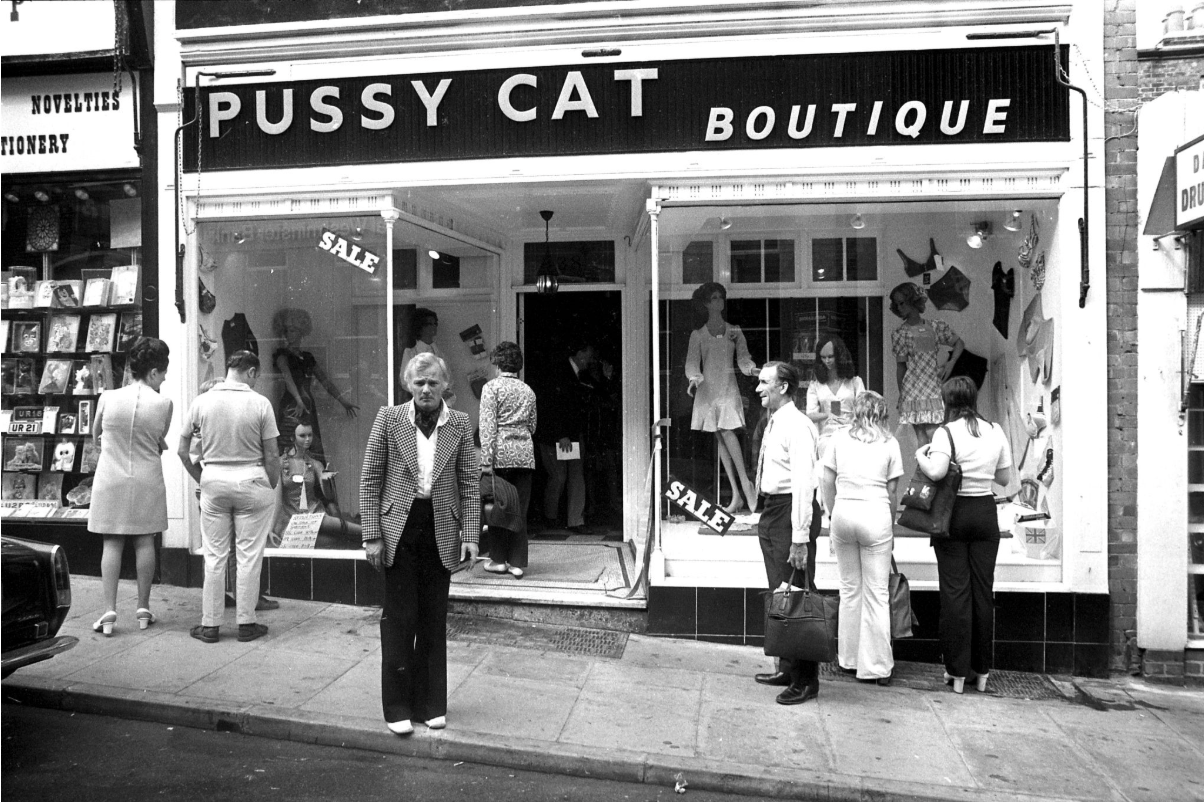
Courtesy of Thanet District Council and the South East Archive of Seaside Photography via Margate Museum
It reminded me of the first time I came to Margate in 2009 (thanks, The Apprentice), so I dug up some old photos and came across this, which is now Fez on Margate High Street:
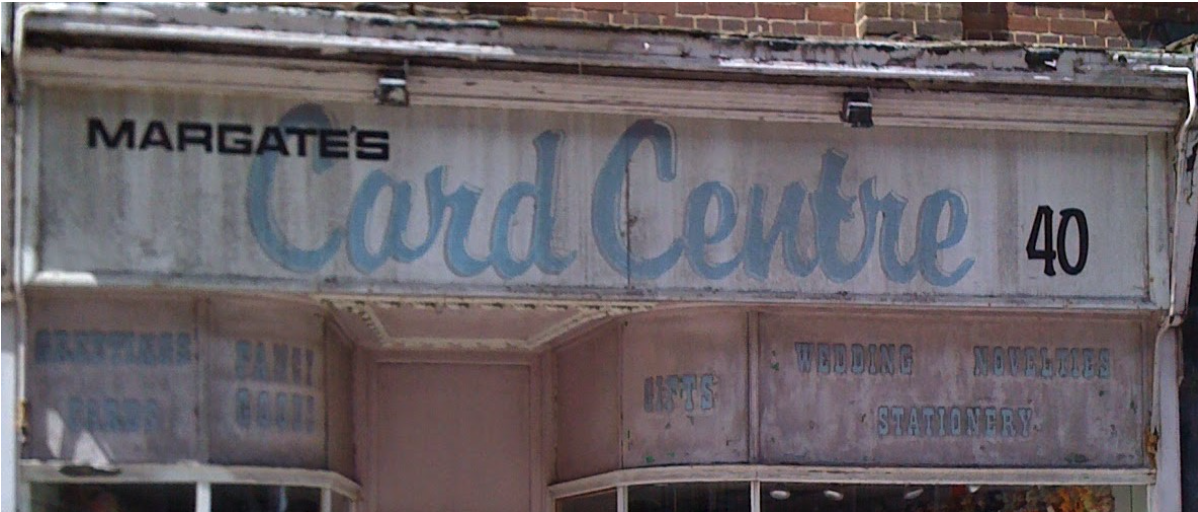
That font has been up there for decades! It places John Inman on Margate High Street, and so we have a little Google, and it turns out that The Templeman Library Special Collection has “some lovely examples of various LGBTQ+ icons, such as Danny La Rue, John Inman and Larry Grayson.” We’ve booked a trip to go and see their archival materials related to these gay public figures who have all been or had a season in Margate. If you’re interested in joining us, do become a volunteer by signing up to Timecounts and searching for Margate Pride. These photos have sent us on a research spiral. We often talk of falling into rabbit holes, following tangents, you never know when you’ll surface, and I’ve ordered a copy of the John Inman biography from the library. There’s a copy lounging in Cliftonville library, so snap it up as soon as it reopens. Support your local libraries!
We end the session talking about all our research leads, and this is when Tony delivers the line that has us all laughing: “I can’t stop thinking about your bra”. It’s such a strong image, this idea that we walk around with a queerness near our hearts, that only we know is there. It makes us more aware of our research: we won’t be able to see everything on the outside, but we have to trust our instincts that it is still there, out of sight.
Finally, we have started our oral history interviews in earnest, and Bob met up with long-time collaborator Michael Davidson and John Norris to talk about all things queer Thanet. We covered a lot of material during this time, and it’s easy to forget how difficult life used to be (not so easy if you’ve lived through the sexual offences act, section 28, AIDS). One of the ideas that we’ve immediately had to reassess is that we’re going to identify some unknown venues like Rumours or The New Inn to focus our research on. Though there are leads for these, people actually had to rely on a form of ‘gaydar’ - that sense that you just knew someone else was queer, they picked up your codes and hidden meanings - because if you got it wrong, you could be jailed. Straight venues were just as important, and you often had to travel outside your hometown to find people, stay safe, or be open to chance encounters. There was talk of hitchhiking (and hooking up) and Ferries staffed almost exclusively with gay workers. But trauma runs through all these stories, which also came up at the end of our group discussion, and it will be the topic of our next session - how are we going to deal with messy histories?
Bob Chicalors