
Heritage Hotline Update: What Makes a Good Oral History Interview?
As part of The Heritage Hotline, we're learning how to conduct oral history interviews to preserve and share LGBTQ+ stories from across Thanet, which might otherwise be lost.
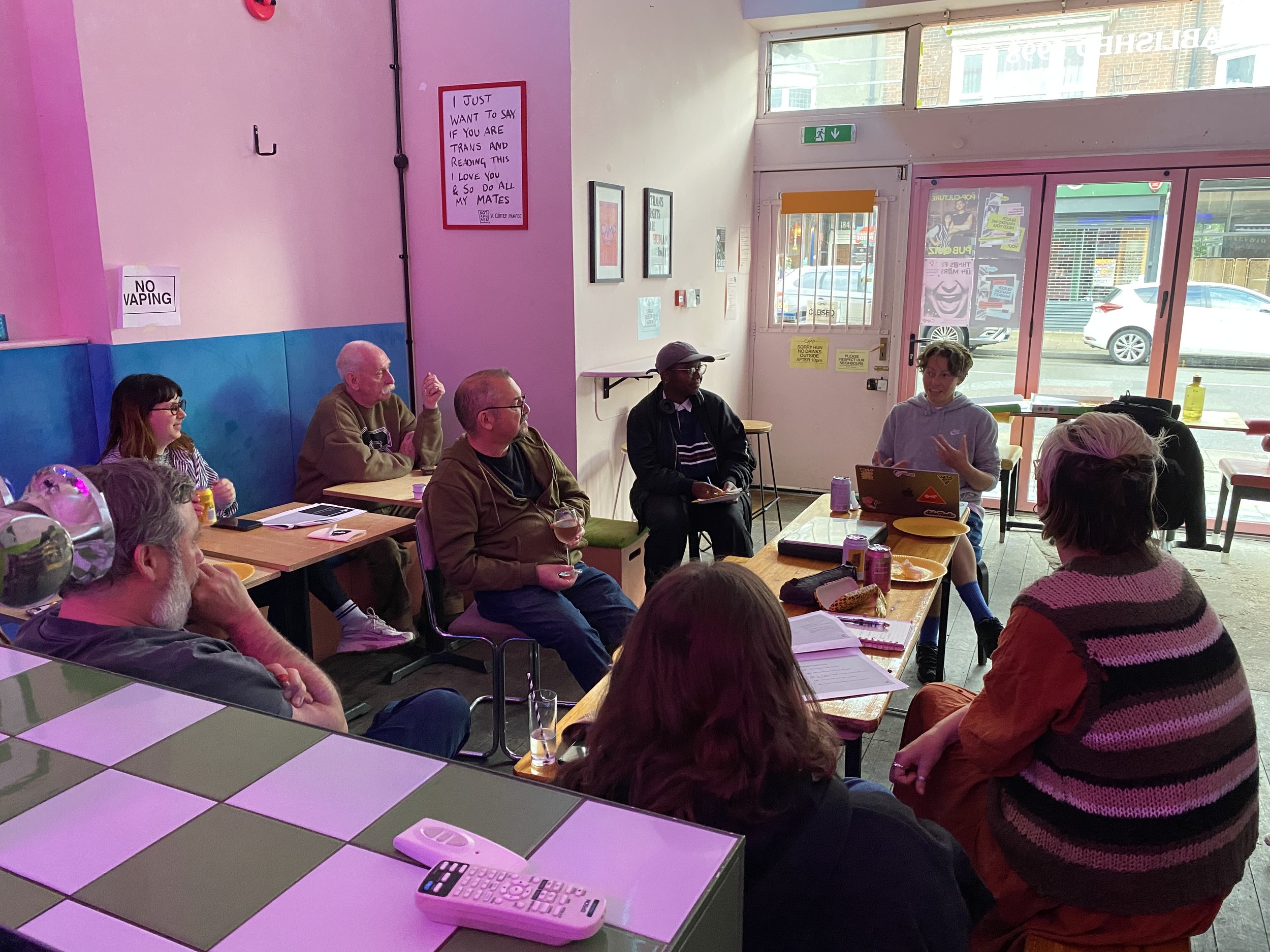
At our last volunteer meet-up, we were joined by our ultimate queer heritage crush: Tash Walker from Aunt Nell, the media company behind the award-winning Log Books podcast. Tash delivered a brilliant training session on oral history interviewing, sharing practical advice drawn from years of experience recording LGBTQ+ stories and histories.
Here are some of our key takeaways about what makes a good oral history interview.
Know the Difference Between Oral History and Having a Chat
The aim of an oral history interview is to help someone tell their own story in their own words.
While it's tempting to have a back-and-forth conversation about shared experiences, it's important not to insert yourself into the narrative.
It's also best practice to schedule a call with your interviewee beforehand. This helps build rapport, gives you a sense of their story, and allows you to tailor the areas you'd like to explore during the interview.
Have an Idea of What You Want to Find Out
Before the interview, think about the areas you'd like to cover and the kinds of stories or information you're hoping to uncover. This can help shape your opening questions and give the conversation some direction.
It's also helpful to send the participant a list of themes in advance. This gives them time to reflect, jog their memory, and think about the experiences they'd like to share, rather than being put on the spot during the interview.
Allow Enough Time
While the ideal length for an oral history interview is usually around an hour, it's worth scheduling more time than you think you'll need.
Building in some extra time creates a buffer if the conversation runs over, and allows space before and after the interview to chat, set up equipment, discuss consent, or simply ease into and out of what can be a meaningful conversation.
Start Simple
Ease into the interview with straightforward background questions that help people settle in.
Questions like:
Where did you grow up?
When did you first come to Thanet?
What brought you here?
can help establish context and build confidence before moving into deeper memories.
Be an Active Listener
Many of us are used to showing we're listening by saying "yeah", "mm-hmm" or "exactly". In an oral history interview, all of those sounds end up on the recording.
Instead, try listening actively through eye contact, nodding and body language. It can help to explain this to the interviewee beforehand, so they understand why you might seem quieter than usual.
Don't Be Afraid of Silence
Resist the urge to fill every pause by immediately moving on to the next question. Silence is often when people remember something important, and interview gold can emerge.
As a rough guide, try silently counting to seven in your head before jumping in.
Follow the Story
Good oral history interviews rarely follow a script.
You might begin with a list of questions, but the most interesting moments often emerge unexpectedly.
If someone mentions a person, place or event that feels important, follow it.
Some of the most useful prompts are also the simplest:
Can you tell me more about that?
What do you remember about that time?
What happened next?
Ask for Detail
Future listeners won't necessarily know the people, places and communities being discussed.
Encourage interviewees to describe the world around them.
What did a venue look like?
Who were the people involved?
How did a particular event feel at the time?
It's also useful to ask for clarification, especially when someone uses a broad description of an emotion. For example, if someone says, "That was strange," you might ask, "Strange in what way?"
Keep It on Track
Sometimes people drift away from the question. While tangents can lead to interesting stories, it's okay to gently guide the conversation back on track.
It can help to explain this beforehand, letting the participant know that you may occasionally raise a hand or redirect them so you can cover everything you'd planned to discuss.
Queer Histories Need Care
Many LGBTQ+ people have lived through periods when being open about their identity carried significant risks.
Stories may involve discrimination, secrecy, loss, friendship, activism, joy, resilience and community. Interviews can sometimes become emotional, and it's always okay to pause, take a break, or move on to another topic.
It's good practice to check in with participants a week or so after the interview, giving them time to reflect and confirm they're happy for the recording to be used.
Taking care of yourself as an interviewer is just as important. Make sure you have someone you can debrief with if needed, and give yourself time to decompress afterwards.
Have a Story to Share?
As The Heritage Hotline begins recording interviews across Thanet, we're excited to put these lessons into practice and continue building an archive of LGBTQ+ life from the 1960s to the 2000s.
A huge thank you to Tash Walker and Aunt Nell for sharing their expertise with our volunteers.
If you'd like to contribute a story, photograph, document or memory to The Heritage Hotline, we'd love to hear from you. Use the short form found on the Heritage Hotline homepage