
Welcome to Hot Gossip
Hot Gossip is your one-stop shop for rumours, stories, and half-forgotten anecdotes about Thanet’s LGBTQ+ heritage.
As part of Margate Pride’s project The Heritage Hotline, we’re uncovering queer histories from the 1960s–2000s across Thanet that have fallen through the cracks and are at risk of being lost forever.
We’re especially curious about:
Which venues were gay-friendly
How did queer people meet before the internet?
Where did people go to hook up?
Who were the gay icons who performed here?
What protests took place?
What was life like for LGBTQ+ people in Thanet between the 1960s–2000s?
Some of these stories exist in fragments, others only in memory. The stories we find will be shared here, alongside updates from our community-led archive-building work.

Why Hot Gossip?
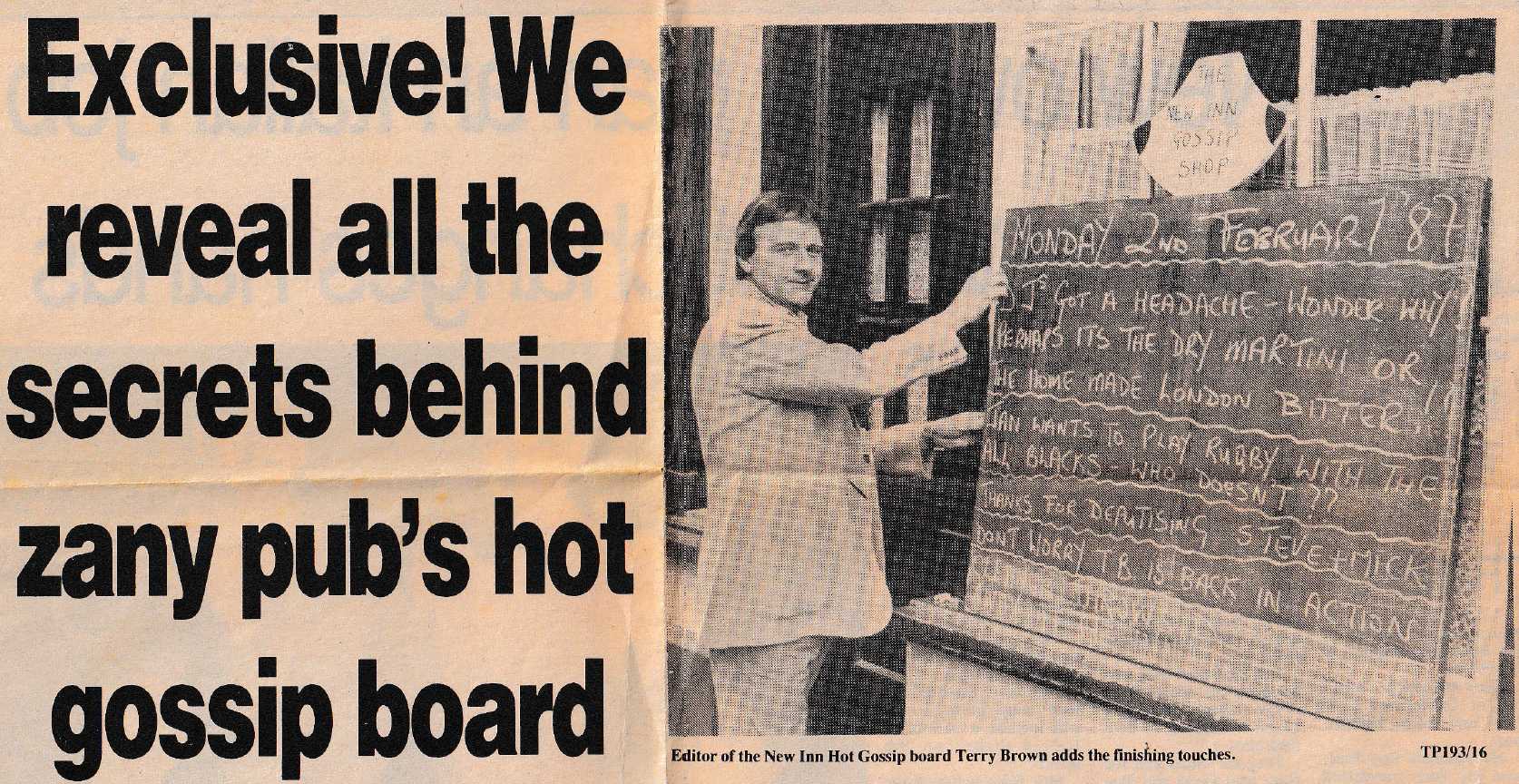
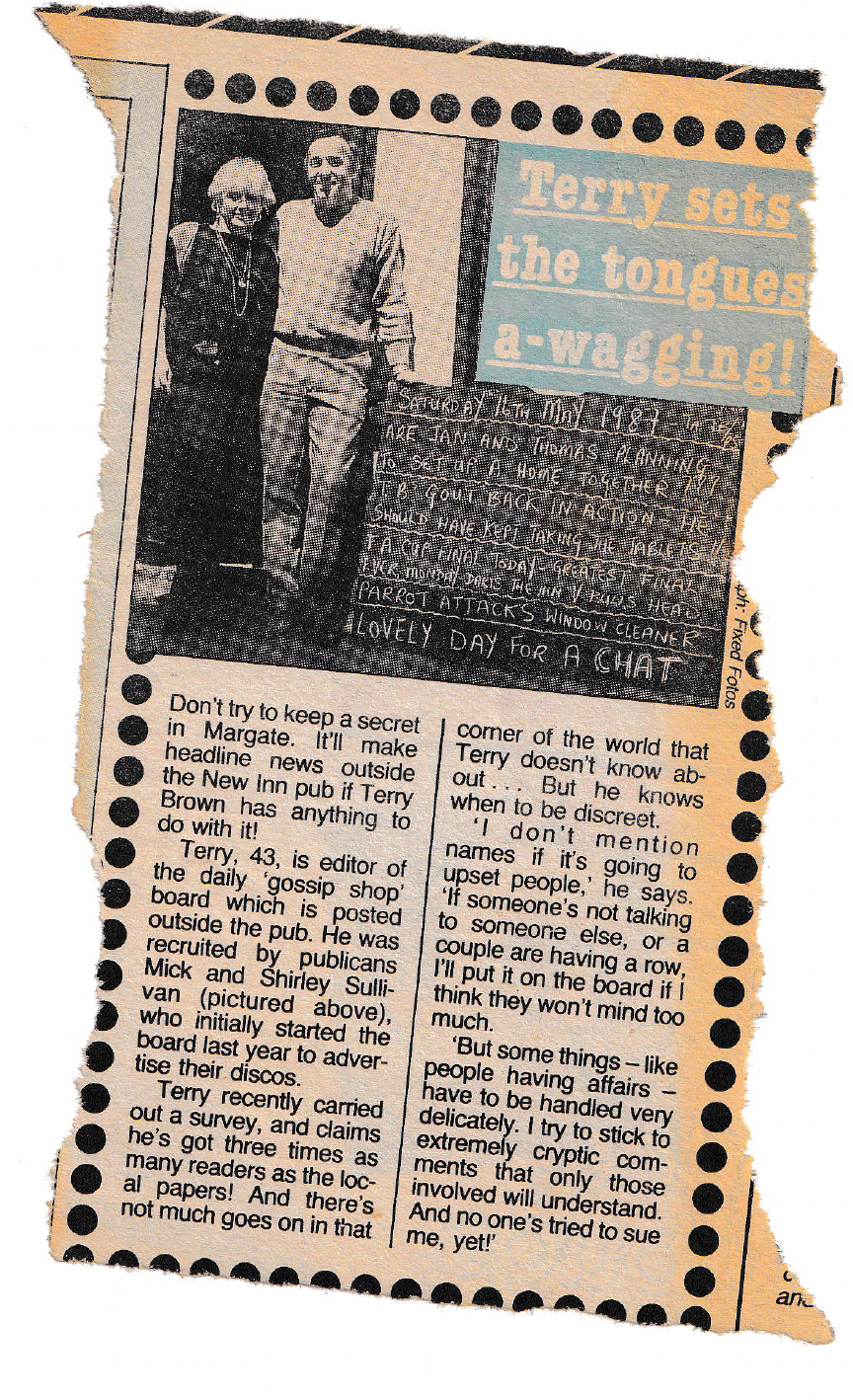
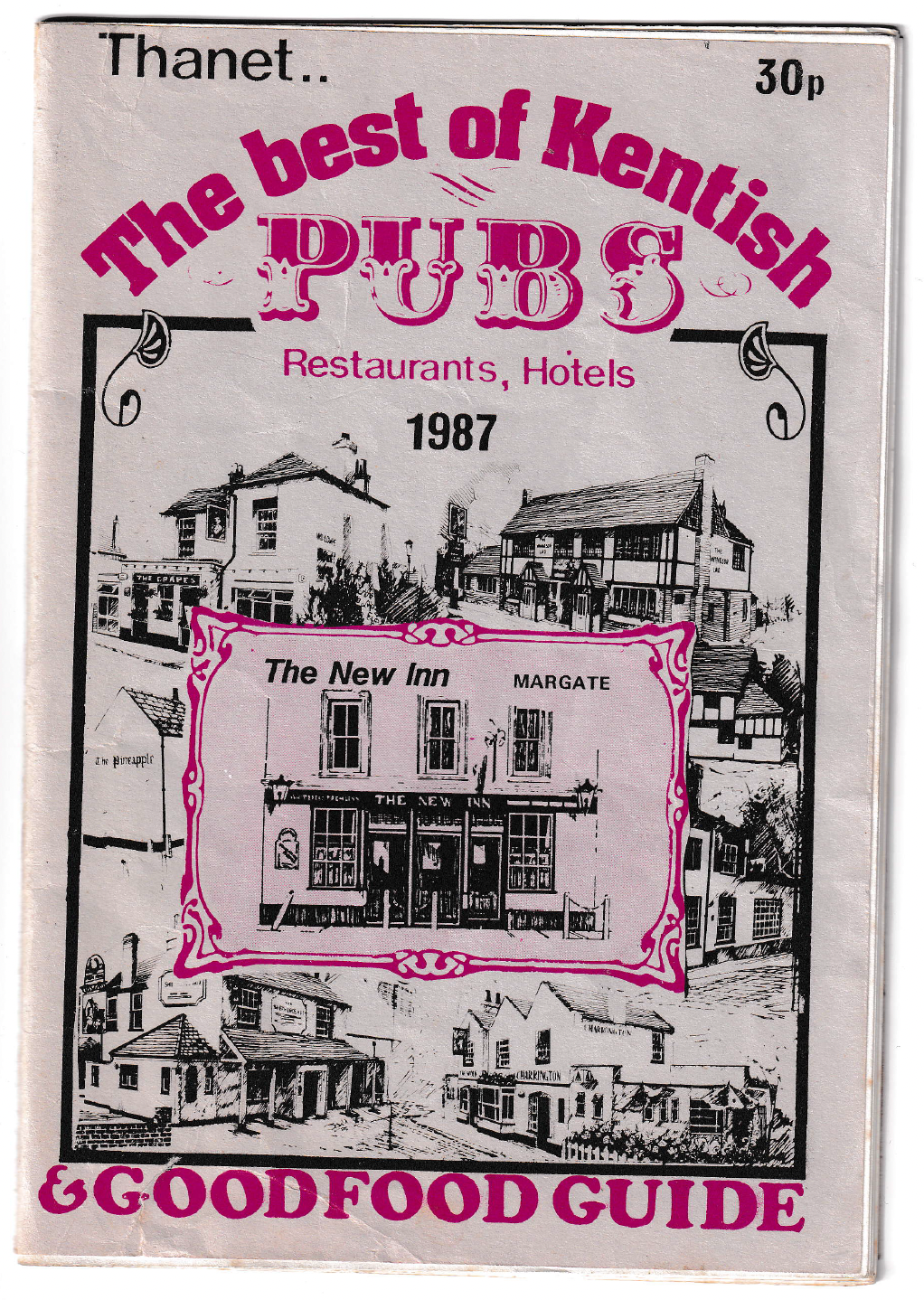
The name Hot Gossip pays homage to the once-infamous chalkboard outside the New Inn in Margate. Now a private residence, the pub was run in the 1980s and 90s by the late Shirley and Mick Sullivan and became a focal point for the local LGBTQ+ community.
Outside, the “Hot Gossip” board drew in passers-by and regulars alike. In 1987, the Thanet Times featured a story on it, highlighting the pub’s zany, spur-of-the-moment antics: celebrating Christmas in September, Easter bonnet parties and holding themed fancy dress parties like “Hollywood Night.” Shirley remembers, “All the men came dressed as Doris Day and we went round New Street singing all the old songs.” Mick adds, “Here we pride ourselves on creating an atmosphere where everyone can relax, no matter who they are.”
Originally “a bit of fun,” the board quickly took on a life of its own. With “never a dull moment, always something going on,” it became a talking point in the street, offering up-to-the-minute news about New Street life. The cryptic board, edited by barman Terry Brown, drew on nicknames, in-jokes, and shared knowledge — basically you had to be there to get it. As the paper noted, “although not everyone understands the juicy snippets of intrigue, it has become very popular.” Shirley adds that its readership was likely “proportionately more than the Thanet Times!”
Gossip as research
In queer communities, history has often been hidden, informal, or deliberately ephemeral — from underground venues to coded social networks. Traditional archives, relying on official documents or mainstream media, can miss much of this lived experience. Gossip, rumours, and hearsay act as informal archives, carrying knowledge, memory, and community insight that isn’t preserved elsewhere.
“As Kwame Holmes notes in What’s the Tea, queer communities — especially racial minority ones — often record their histories through gossip (“tea”) and ephemera, forms that can be illegible to outsiders. Could there be such a thing as an archive of gossip? And should gossip itself be treated as a valid form of community archival practice?” -Queer of Colour Archiving (2018)
By documenting these informal stories, we recognise them as a legitimate way of preserving queer life, capturing memories of spaces, events, and networks that might otherwise be lost.
Get involved
The Heritage Hotline is a community project, and it depends on people sharing their stories. If you have a memory, a photograph, or even just a small detail you think might be important, we would love to hear from you.
Find out more about the project and how to get involved here.
Post by Jen Scott